AI code generation has reached an unprecedented milestone in 2026. Software engineering teams now rely on frontier LLMs for multi-file refactoring, autonomous agent execution, and real-time coding assistance.
Our team at IT Apps LAB benchmarked Claude 3.7 Sonnet, GPT-4.5 Turbo, Qwen 2.5 72B, DeepSeek R1, and Llama 3.3 on HumanEval, SWE-bench, and real-world full-stack Flutter and Rust codebases.
 1. Claude 3.7 Sonnet — Best for Complex Architectural Reasoning
Testing Notes: Claude 3.7 Sonnet demonstrated superior multi-file reasoning during refactoring tasks. It maintained codebase context across 200,000+ token context windows without hallucinating function signatures.
What We Liked:
- Unbeatable architectural refactoring accuracy on complex codebases.
- Hybrid thinking mode for deep step-by-step logic.
What Could Be Improved:
- Higher per-token API cost compared to open weights.
Official Link: Visit Anthropic Claude Website
 2. GPT-4.5 Turbo — Best for Fast Single-File Code Completions
Testing Notes: GPT-4.5 Turbo delivered rapid single-file completions with exceptionally concise explanations and accurate unit test generation.
What We Liked:
- Fast response latency and streaming throughput.
- Excellent function calling and JSON tool use.
What Could Be Improved:
- Can be overly verbose on simple syntax questions.
Official Link: Visit OpenAI Website
 3. Qwen 2.5 72B — Best Open-Weights Local Model for Privacy
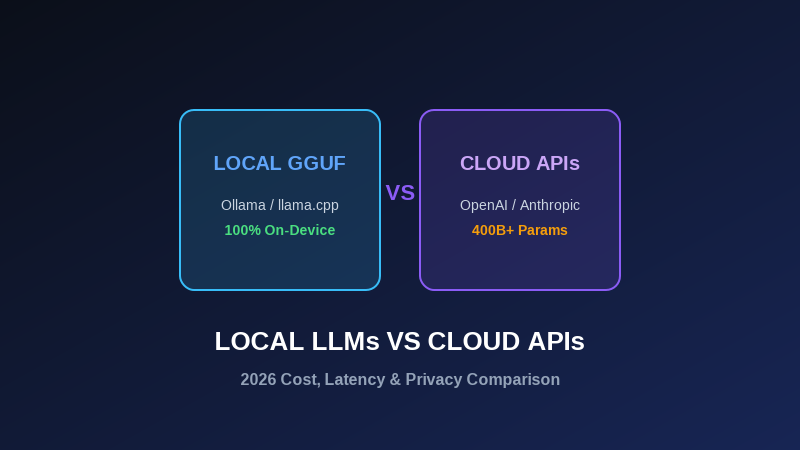
Testing Notes: Qwen 2.5 72B GGUF running locally via Ollama / llama.cpp delivered near-frontier coding quality with 100% data privacy and zero API token costs.
What We Liked:
- 100% local on-device execution for sensitive enterprise code.
- Open weights format (GGUF / Safetensors).
What Could Be Improved:
- Requires Mac Studio or GPU workstation with 64GB+ VRAM to run at full speed.
Official Link: Visit Qwen GitHub Repository
4. DeepSeek R1 — Best Open Reasoning Model
Testing Notes: DeepSeek R1 excelled at mathematical algorithm derivation and competitive coding problems, producing transparent chain-of-thought traces.
What We Liked:
- Outstanding performance on algorithms and math.
- Freely available open weights.
What Could Be Improved:
- Reasoning traces can increase output token latency.
Official Link: Visit DeepSeek Official Website
5. Meta Llama 3.3 70B — Outstanding General Enterprise LLM
Testing Notes: Llama 3.3 70B offers balanced performance across instruction following, agent tool use, and multilingual code documentation.
What We Liked:
- Permissive open license for commercial deployment.
- Strong multilingual documentation support.
What Could Be Improved:
- Slightly lower HumanEval score than Claude 3.7.
Official Link: Visit Meta Llama Website
Grid 1: Features & Performance Comparison Matrix
| LLM Engine | Primary Functionality | Context Window | Data Privacy | Overall Rating |
|---|---|---|---|---|
| Claude 3.7 Sonnet | Architectural Refactoring & Extended Thinking | 200,000 Tokens | Cloud API / Enterprise Agreement | |
| GPT-4.5 Turbo | Single-File Completion & Function Calling | 128,000 Tokens | Cloud API / Opt-out Training | |
| Qwen 2.5 72B | 100% On-Device Local Code Generation | 32,000 Local GGUF | 100% On-Device Local | |
| DeepSeek R1 | Mathematical Logic & Algorithm Reasoning | 64,000 Tokens | Open Weights / Self-Hostable |
Grid 2: Pricing, Licensing & Business Model Breakdown
| LLM Engine | Input Cost (per 1M) | Output Cost (per 1M) | License Model | Best Suited For |
|---|---|---|---|---|
| Claude 3.7 Sonnet | $3.00 | $15.00 | Proprietary API | Complex codebase refactoring |
| GPT-4.5 Turbo | $2.50 | $10.00 | Proprietary API | Fast agentic function calling |
| Qwen 2.5 72B | $0.00 (Local) | $0.00 (Local) | Apache 2.0 Open Weights | Private enterprise codebases |
| DeepSeek R1 | $0.55 | $2.19 | MIT Open License | Algorithm derivation & competitive math |
Community Discussion (3)
Leave a Comment
You must be signed in to leave a comment on this article.